


Yep – love is a well of learning. And learning is always, in some way, about love. So give me a minute to explain.
Years ago I wrote a piece about motherly love for a publication in Switzerland. The timing could not have been more personal: I was nine months pregnant with my fourth child: full of love, expectationI remember wondering: What will this mysterious thing called motherly love do to me this time? What will it do to my child? And what if there is no love at all; at least not in the way we imagine it?
Those questions stayed with me.
Automatic and for life
“A mother’s love is automatic and for life. You can’t do anything about it,” my own mother used to say. But has it always been that way? Is motherly love truly unconditional and eternal? Or is it shaped by culture, biology and circumstance?
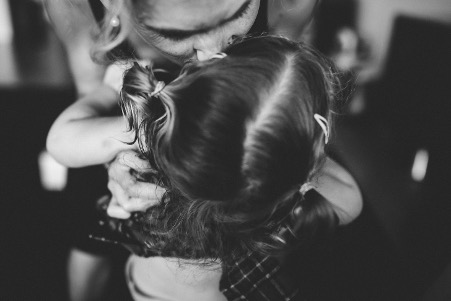
When I explored these questions years ago, I spoke with developmental psychologist Pasqualina Perrig-Chiello, Professor Emerita of Developmental Psychology at the University of Bern, and an expert on life-span development and intergenerational family relationships. Her answer was both clear and nuanced. “A mother’s love is for life,” she said. “However, like the mother–child relationship itself, it can change over the course of one’s life. It can become more intense and intimate—or it can lead to alienation.”
According to Perrig-Chiello, much depends on the bonding patterns mothers themselves experienced growing up. These early relationships with our own parents often shape how we later relate to our children. When those experiences were positive, they become valuable emotional resources throughout life. When they were painful, they can feel like a heavy burden—and sometimes fractured relationships become difficult to avoid.
Biological mothers don’t own motherly love
Part of the confusion around motherly love, Perrig-Chiello argues, comes from the fact that society rarely defines what it actually is. The term is often emotionally charged and politically loaded. Psychologically speaking, however, maternal love is both biological and socially learned.
Hormones such as oxytocin increase before, during and after birth, supporting emotional bonding. But the way love is expressed is also shaped by the social environment, cultural expectations and a mother’s own personality and experiences.
What remains constant is the profound dependence of young children on sensitive and reliable care. In the early years especially, a child’s development depends heavily on attentive caregiving. Yet this care does not have to come exclusively from the biological mother. Fathers, grandparents or adoptive parents can provide the same emotional support.
As Perrig-Chiello puts it simply: “Biological mothers don’t own motherly love.”
Love and learning?
As a journalist, I have met hundreds of interview partners and asked thousands of questions. Yet the ones about motherly love never really fade away; even years after that conversation.
Quite the opposite: over time, even more questions emerge.
In recent years, many of them have been linked to another topic close to my heart: learning.
Are we, as mothers, responsible for our children’s learning journeys? What is our role? How far do we go?
I went as far as founding a learning platform. What about you?
